Everything in the app, on one page. All of it is free.
15Mushafs
8riwayat
240translations
90languages of translation
48tafsirs
64recitations
66lessons
77app languages
Read
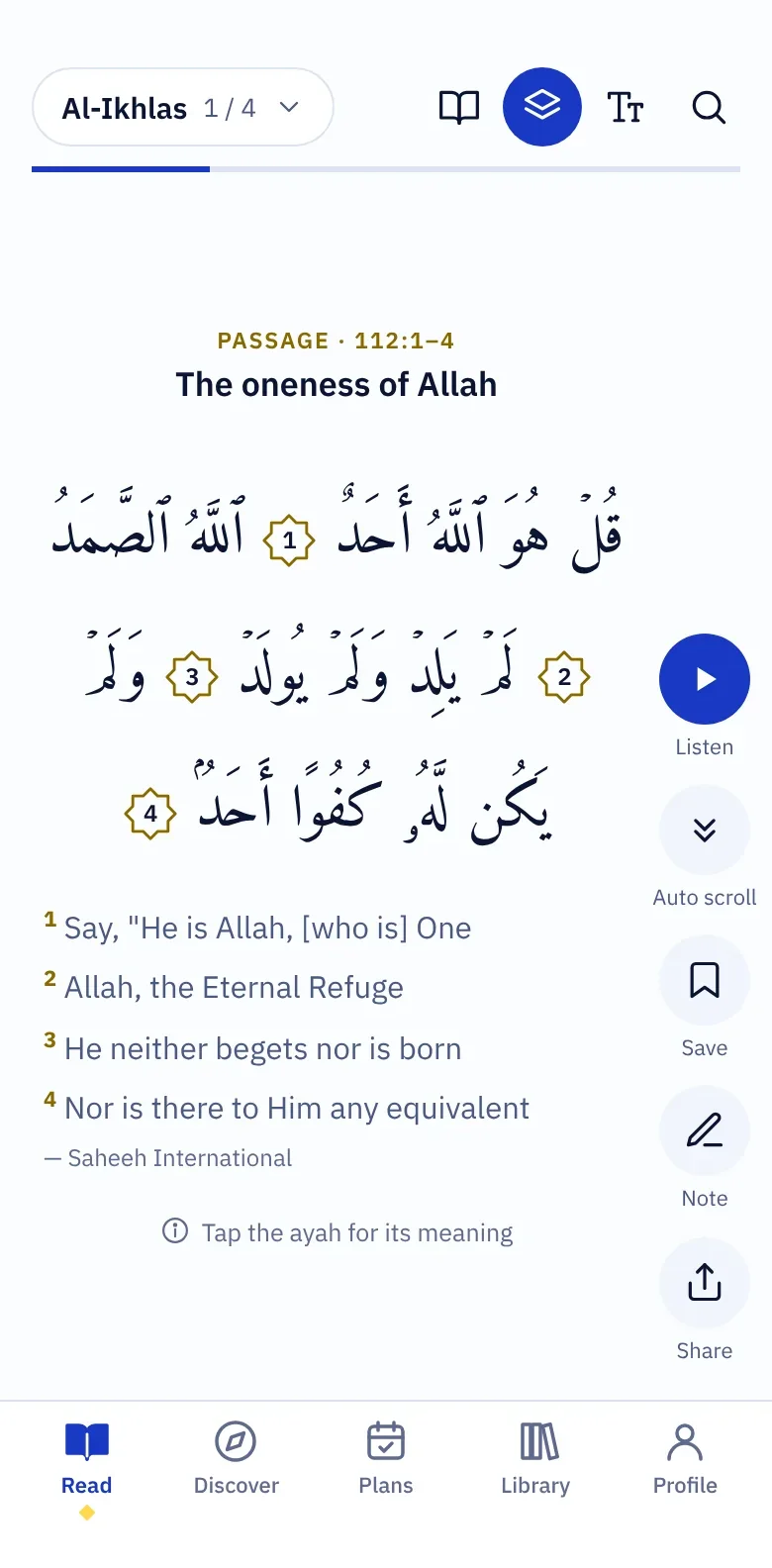
The whole Quran, one ayah per screen, in Mushaf order.
Passage mode and surah cards. Juz, hizb and sajdah markers. Auto scroll.
The Mushaf page by page: 15 Mushafs, among them Madinah, IndoPak in 13, 15 and 16 lines, and Shamarly.
8 riwayat: Hafs, Warsh, Qalun, al-Duri, Shu‘bah, al-Susi, al-Bazzi and Qunbul, each with its text and reciters.
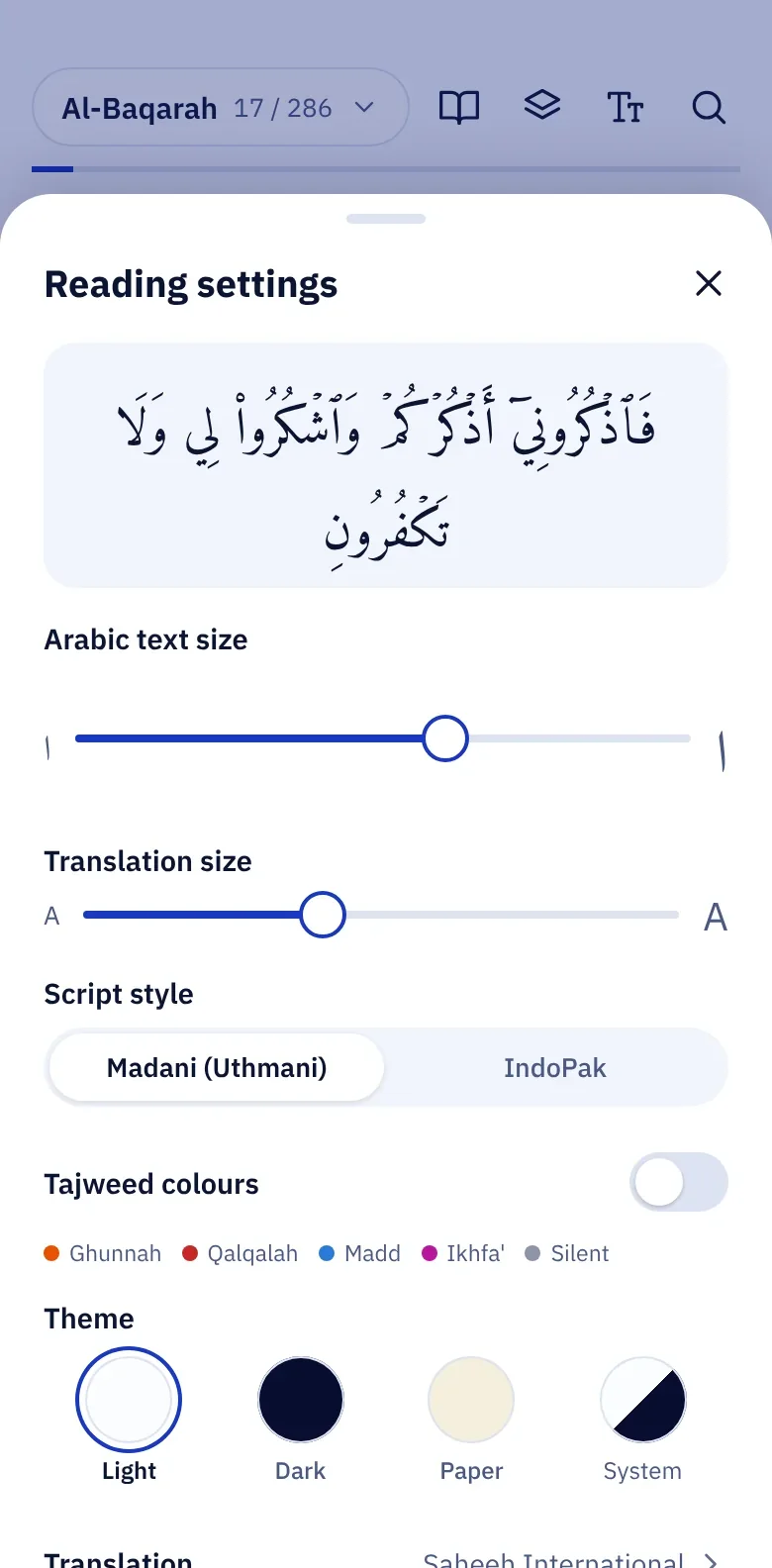
Light, dark and paper themes. Tajweed colours.
Understand
Tap an ayah: a short explanation quoted from Al-Muntakhab (Al-Azhar), in Arabic and English.
240 translations in 90 languages, each with its translator’s name.
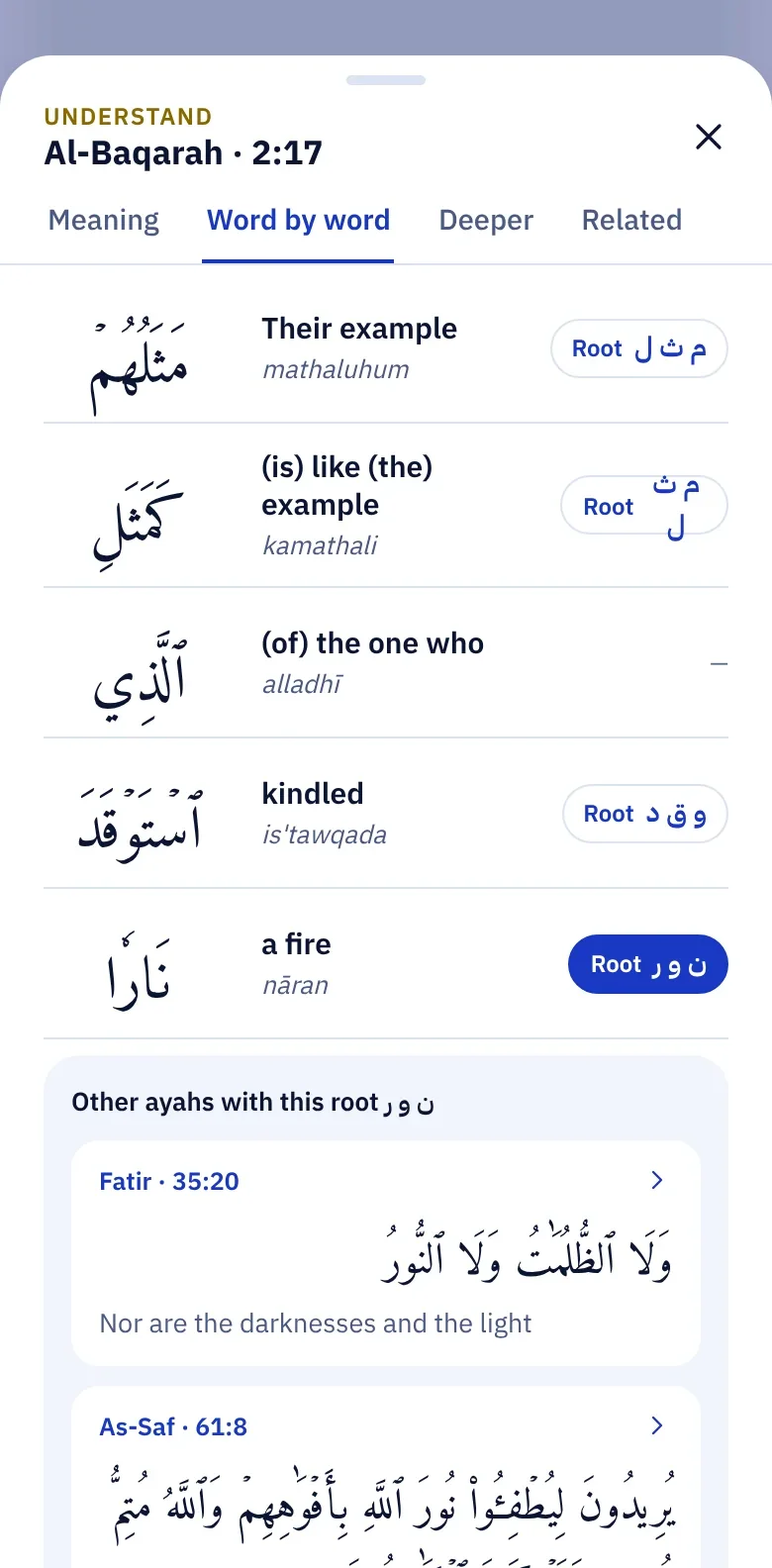
Word by word, with roots, in English and Arabic.
A library of 48 tafsirs: 37 in Arabic, and others in English, Urdu, Bengali, Kurdish and Russian.
Related ayahs. About this surah. Topics. The Quran in numbers.
Search by word, by surah and ayah, by topic, or by voice: recite a few words and the app finds the ayah.
Listen
64 recitations by 50 reciters, Murattal and Mujawwad, with a teaching recitation and one for children.
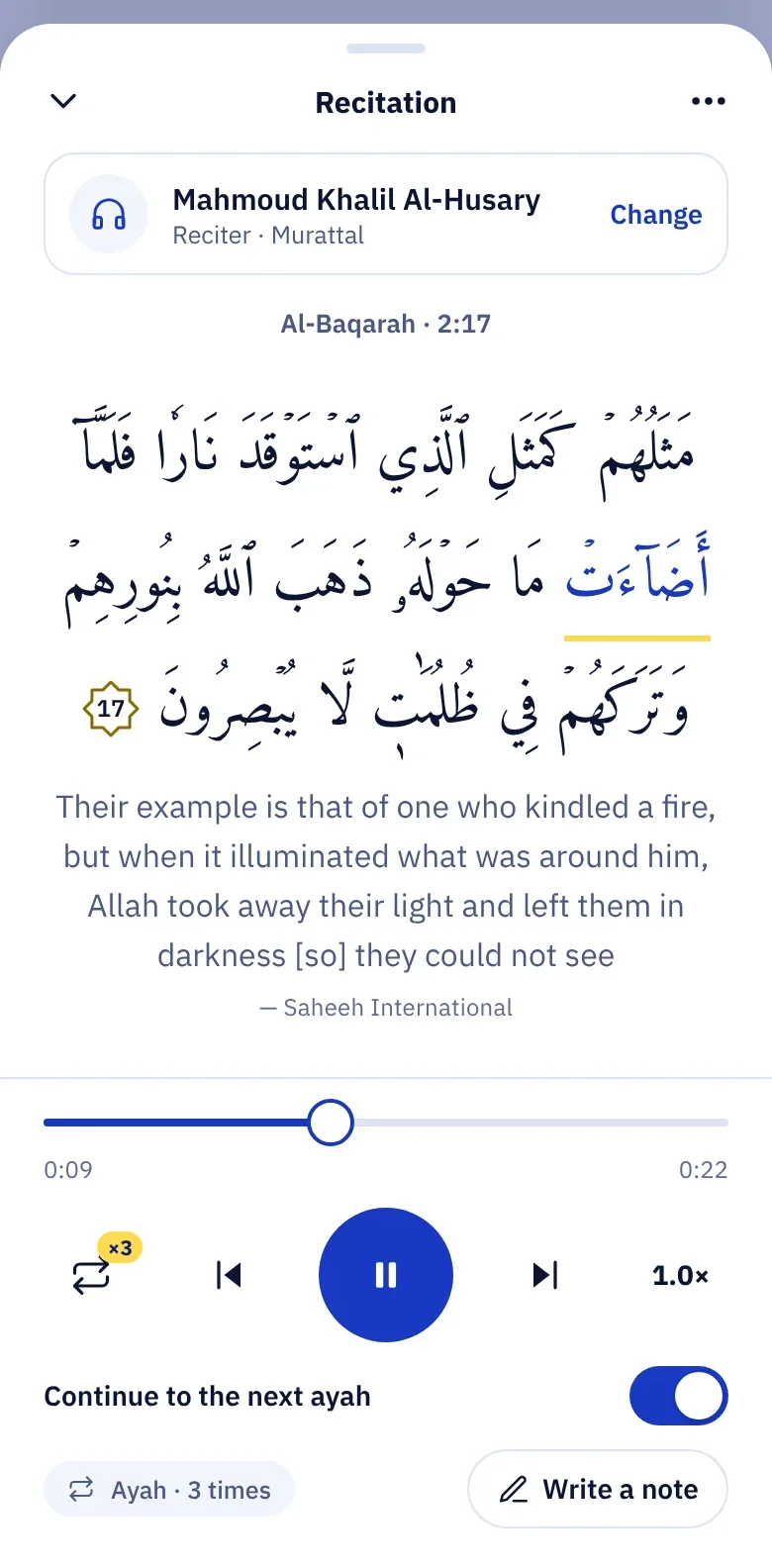
13 recitations with each word highlighted as it is recited.
31 recitations ayah by ayah.
20 recitations in the other seven riwayat: Warsh, Qalun, al-Bazzi, Qunbul, al-Duri, Shu‘bah and al-Susi.
Repeat an ayah or a range as many times as you need, at the speed that suits you.
Download a surah to listen offline.
Learn
66 lessons in Arabic and English, each shown and heard in the Quran itself.
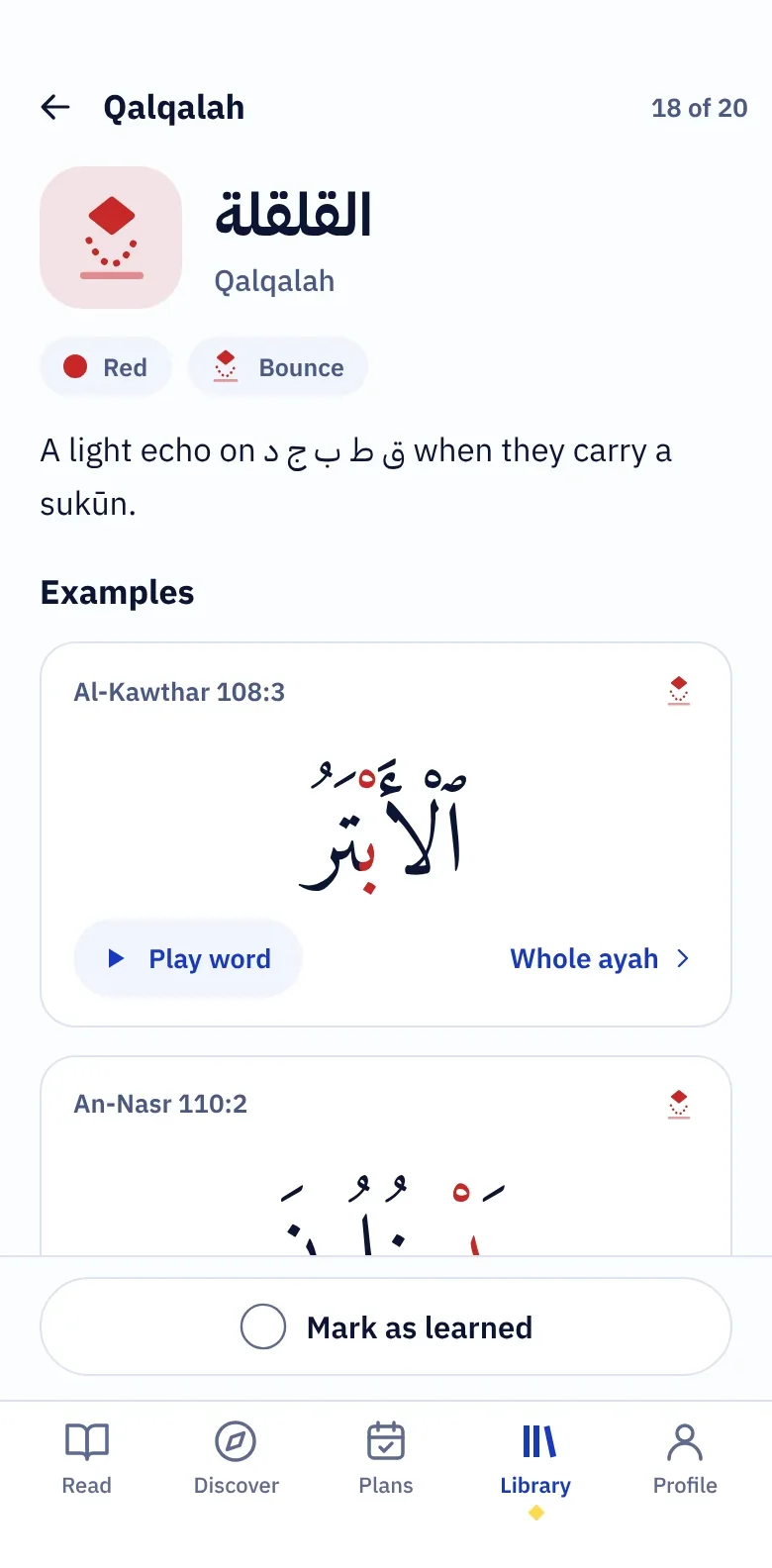
Learn tajweed: 20 lessons.
The letters and where they are made: 16 lessons.
Stopping and starting: 3 lessons.
Reading the Mushaf, its marks and spellings: 27 lessons.
Tajweed is learned best with a teacher.
Memorise
New ayahs step by step, each joined to the one before.
Review by passage on spaced days, with three honest answers: Knew it, Hesitated, Forgot.
“I already know this” for what you memorised before. Recite a surah whole.
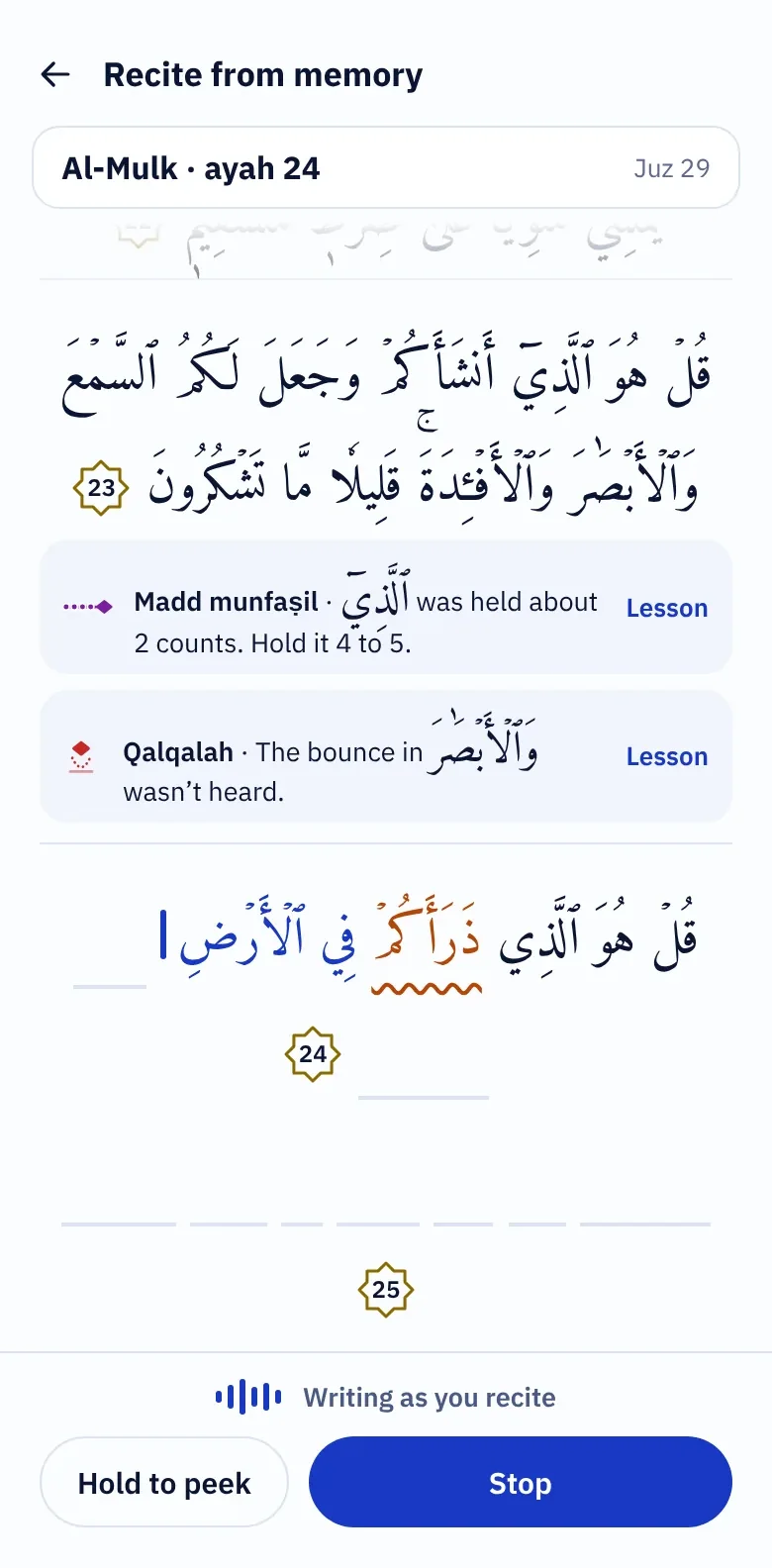
The listening happens on your phone. Nothing is recorded, stored or sent.
Recite from memory and the app listens. Start anywhere: it follows you ayah by ayah and marks a word it did not hear, or heard differently. It never calls a word wrong, and it can miss a mistake. At the end, you can add those ayahs to tomorrow’s review. Hafs only.
Notes and reflection
For reflection, tadabbur: an ayah stops you, and what you think stays with you.
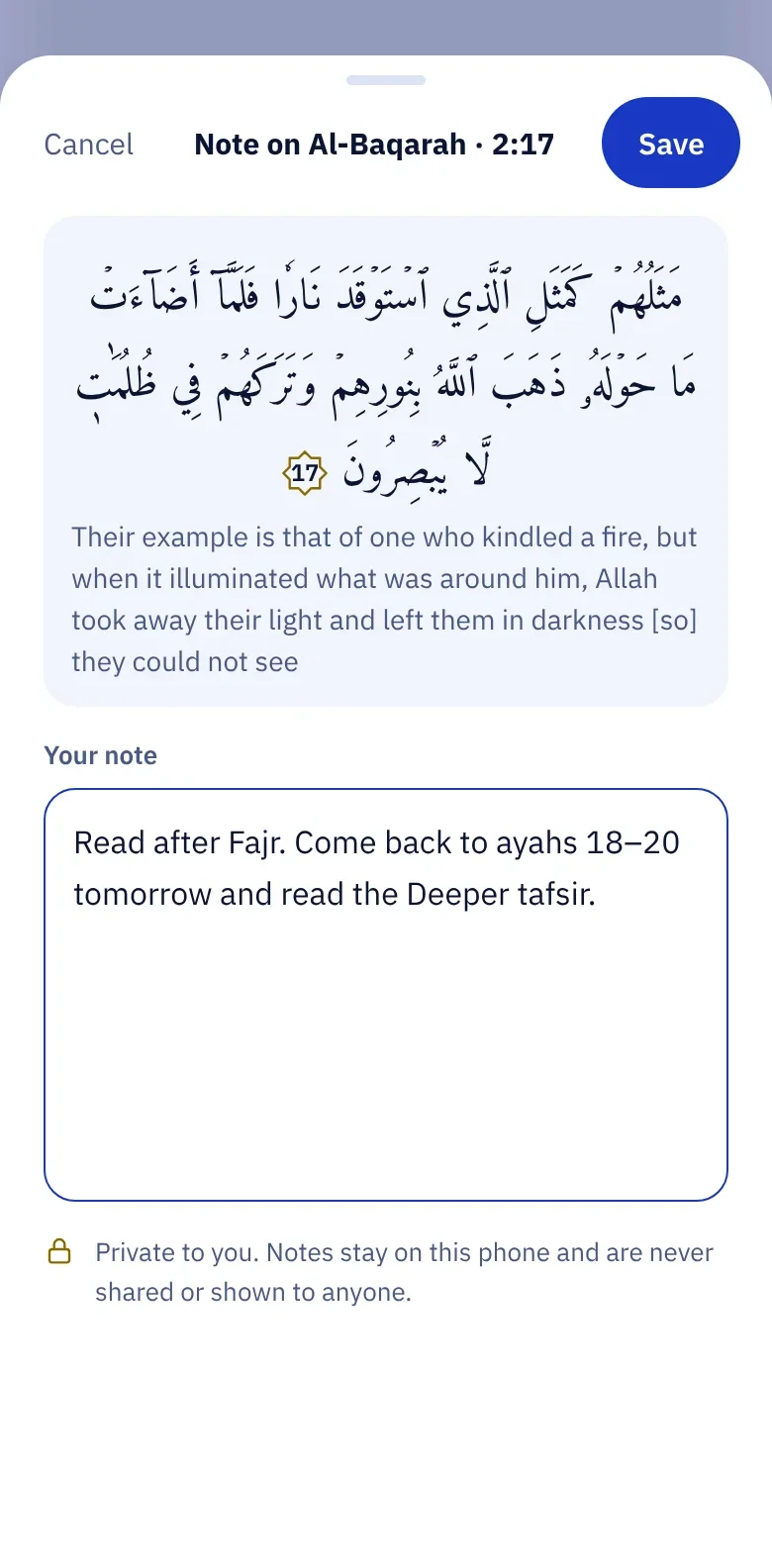
Write it. Open a note from the ayah itself and write what stays with you. One note for each ayah: edit it any time, it shows the day you last edited it, and deleting it asks first.
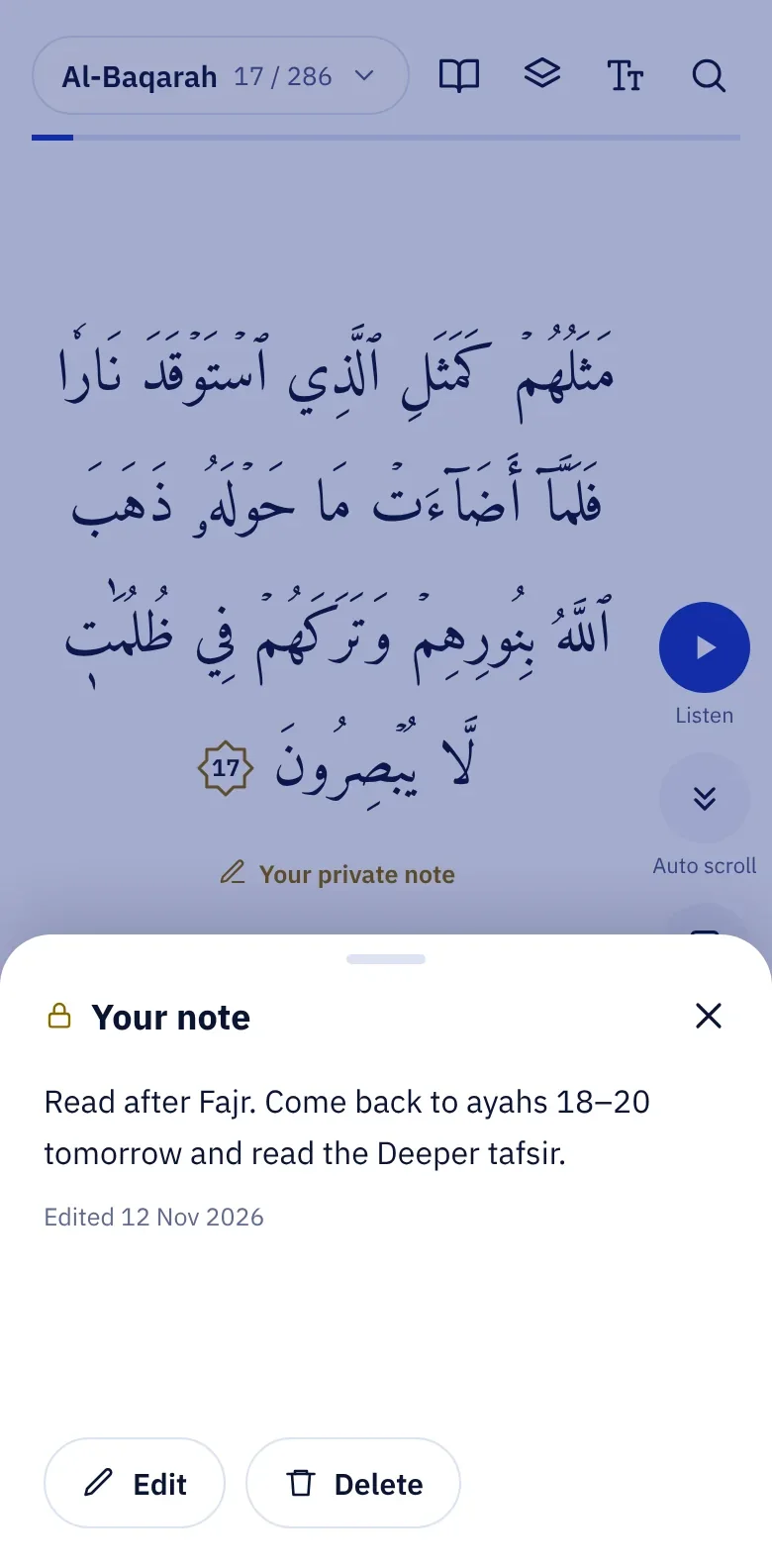
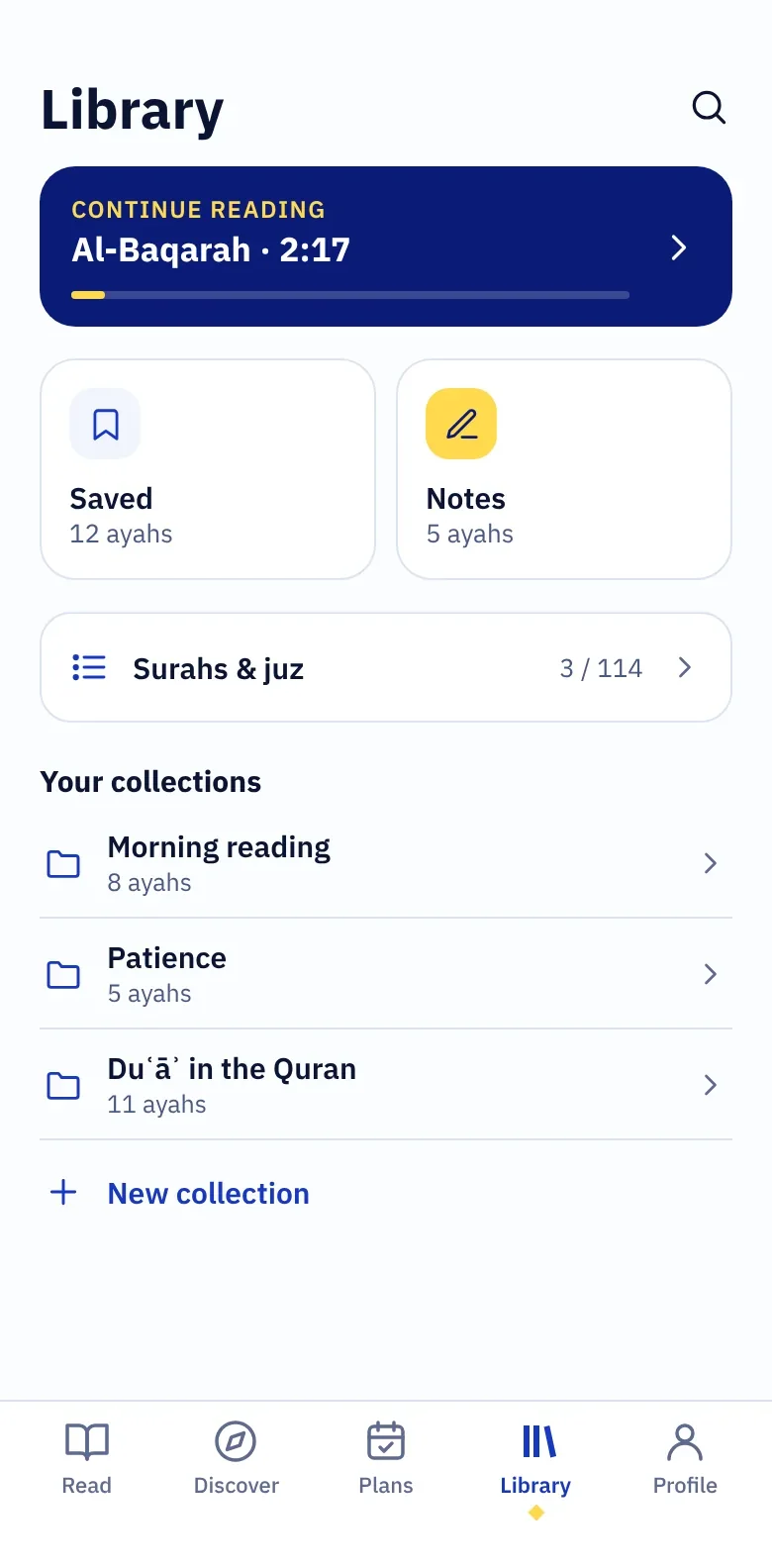
Meet it again. An ayah with a note carries a small mark, so you meet your note when you read that ayah again. All your notes are in Library › Notes, the most recently edited first.
Yours alone. Notes stay on your phone, with no account. No one sees them, no one comments, and they are never shared or shown to anyone.
It moves with you. Notes leave your phone only inside a backup file you choose to make, and that file brings them to a new phone.
A note is your own thought, not an explanation of the ayah. Explanations in Bayinat come from named sources; the note is yours.
Writing a note
An ayah with its note
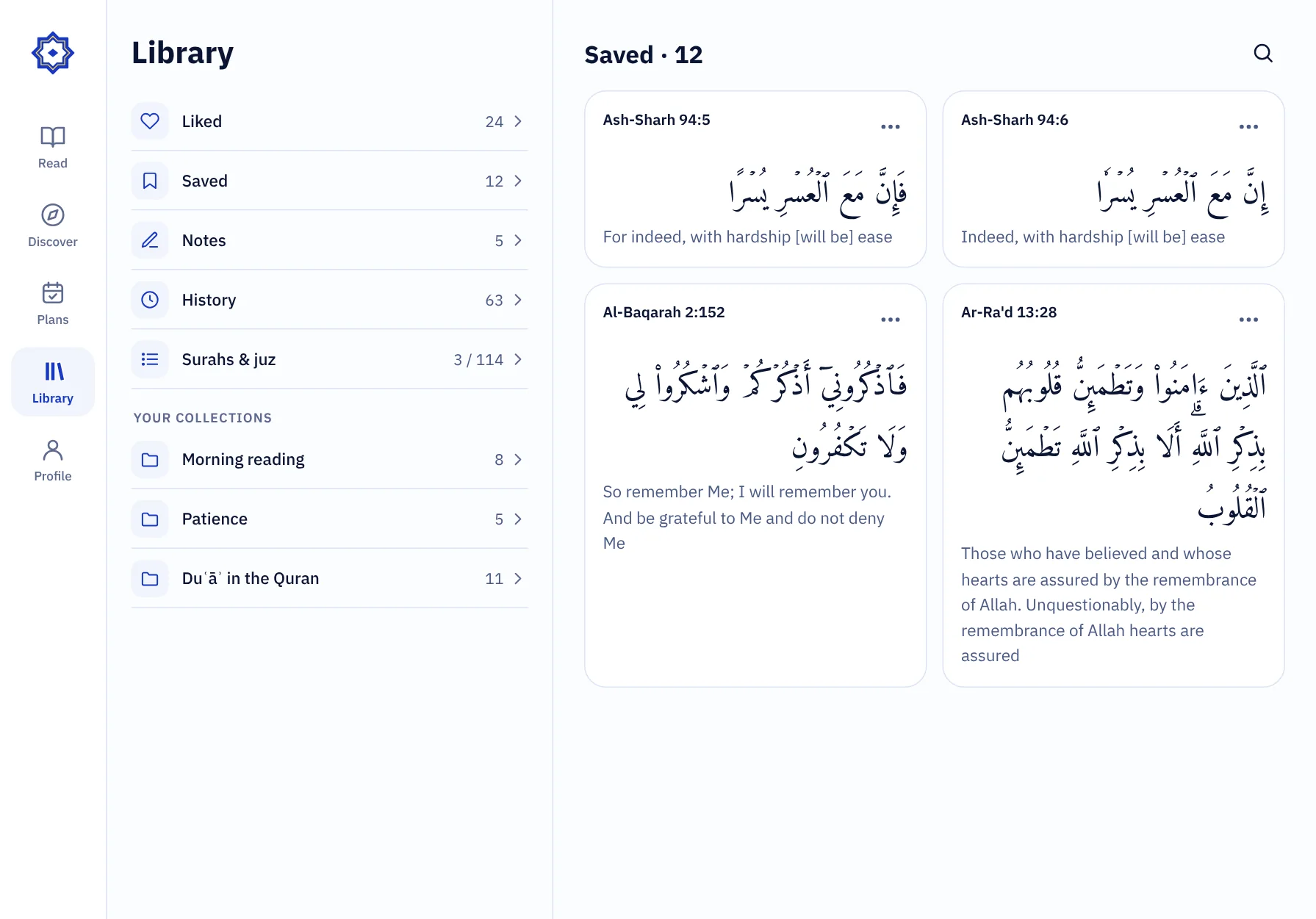
The Library
Keep going
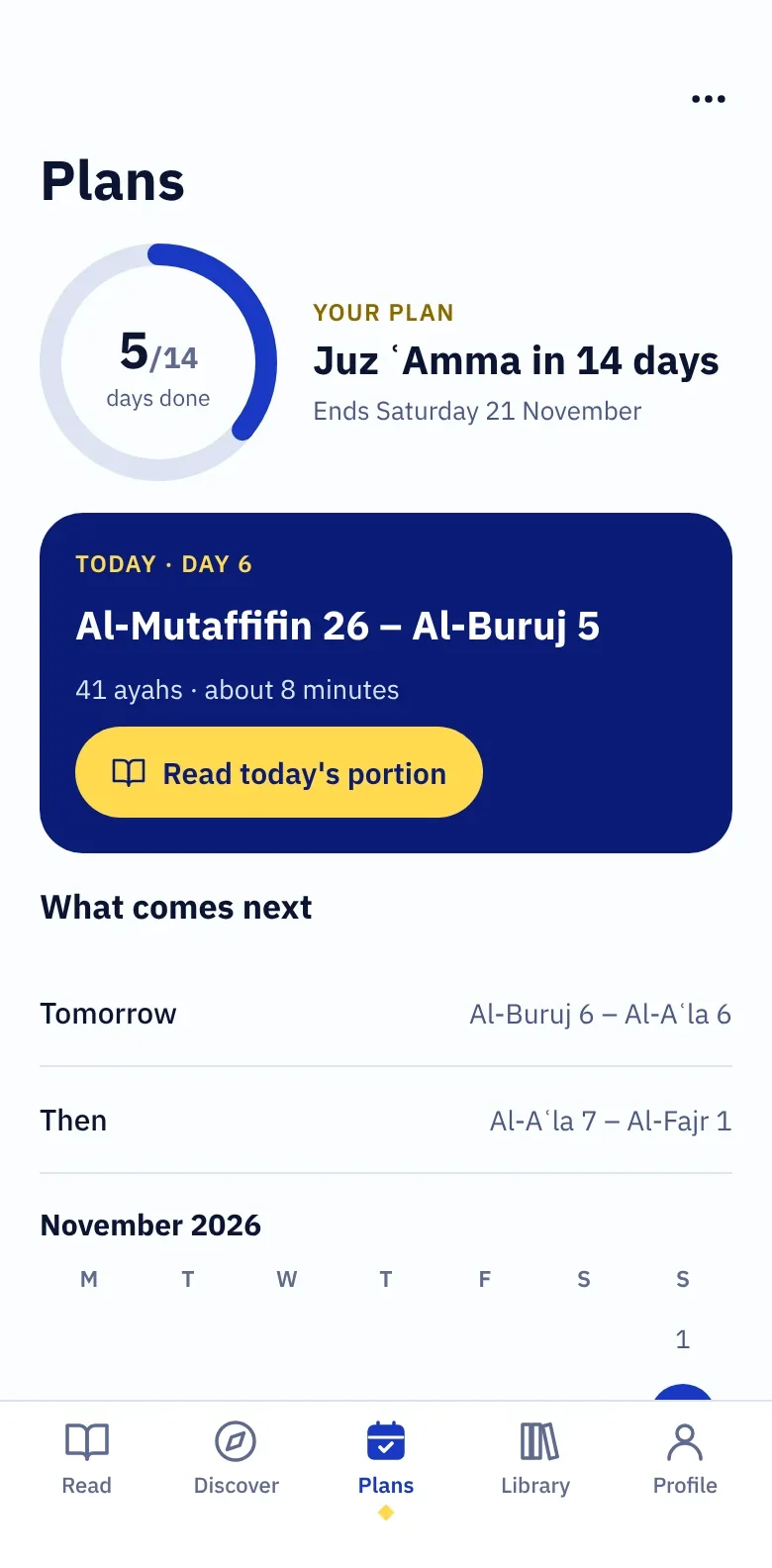
A daily goal from 2 minutes, a gentle streak, one reminder a day at most.
6 reading plans, among them the Quran in 30 days, Ramadan and Juz ‘Amma, or build your own.
Khatma: every completed reading kept, with the days it took.
Widgets on the home screen and the lock screen, on iPhone and Android: the ayah of the day, continue reading, today’s goal.
An ayah first: choose the apps you open too often. Before one of them opens, Bayinat shows one ayah with its translation, and “Continue” always works at once. Every time, once an hour or five times a day; pause it whenever you like. A weekly summary shows the ayahs you met.
Everywhere
iPhone and Android phones, iPad and Android tablets.
The television: Android TV, Google TV and Samsung. Listen and read along, alone or with the family: the ayah being recited fills the screen with its translation. The Mushaf as a two-page spread.
Yours
Saved ayahs, collections you name yourself, and share cards.
A backup file to move everything to a new phone.
Works offline once downloaded. The app in 77 languages.
Trust
No account. No ads. No public comments. No analytics in the app.
Every explanation names its source. Nothing is machine-written.
Free to read: the whole Quran, every translation and the short explanation. Supporting Bayinat is optional, and everything stays free either way.
The only thing the app sends us is a mistake report, when you choose to send one.